Product Design & Development
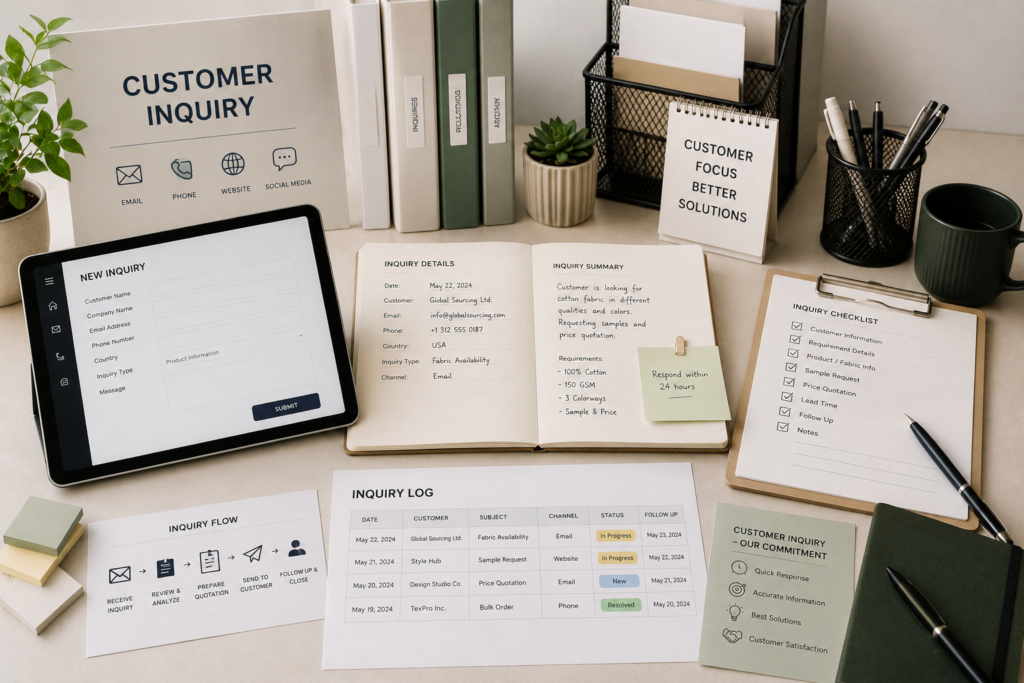
Customer Inquiry
The product development process begins with a customer inquiry, where the buyer shares their requirements, including design concepts, product specifications, target price, order quantity, delivery timeline, and quality expectations. This stage helps establish a clear understanding of the project scope and customer objectives. The development team carefully reviews the inquiry, evaluates its feasibility, and communicates with the buyer to clarify any technical or commercial details. A well-defined customer inquiry lays the foundation for efficient planning, accurate costing, and successful product development while ensuring the final product meets the buyer’s expectations.
Concept & Design Development
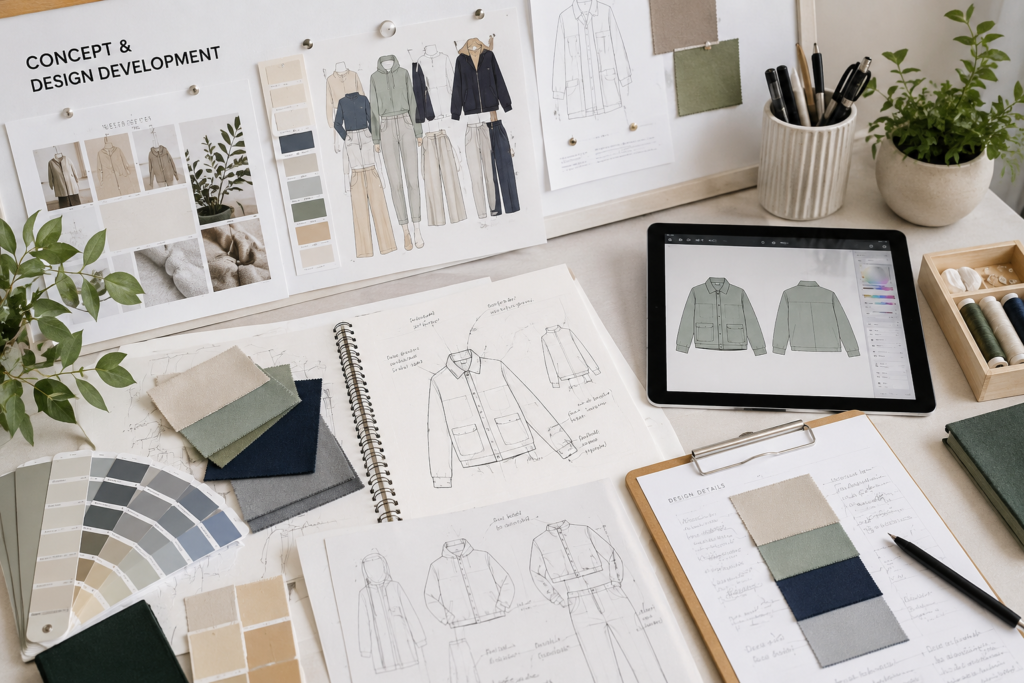
The Concept & Design Development stage transforms the buyer’s requirements into creative and practical garment designs. Designers develop mood boards, color palettes, CAD sketches, and style concepts while considering current fashion trends, target consumers, and brand identity. Fabric options, trims, and construction details are also explored to ensure the design is both visually appealing and production-friendly. This collaborative process helps refine ideas and create a strong foundation for successful product development and sample creation.
Fabric & Trim Sourcing
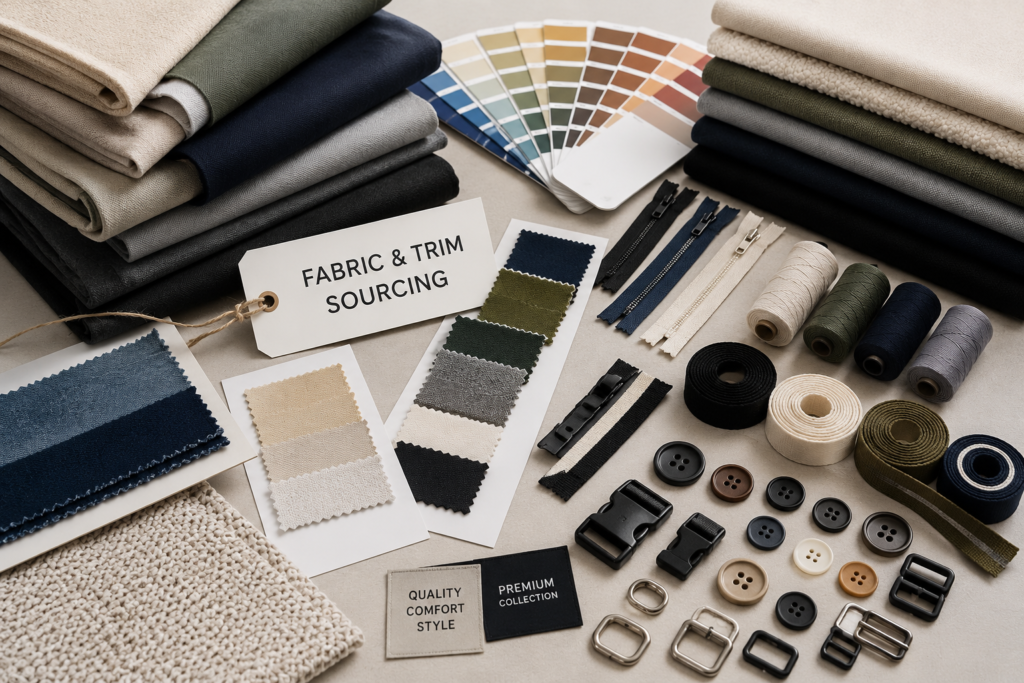
Fabric & Trim Sourcing involves selecting and procuring the most suitable materials required for garment production. Based on the approved design and buyer requirements, the sourcing team identifies high-quality fabrics, buttons, zippers, labels, threads, elastic, and other trims from reliable suppliers. Every material is evaluated for quality, color, durability, cost, and availability to ensure it meets the product specifications. Efficient sourcing helps maintain product quality, control costs, and ensure timely production.
Costing & Feasibility Analysis
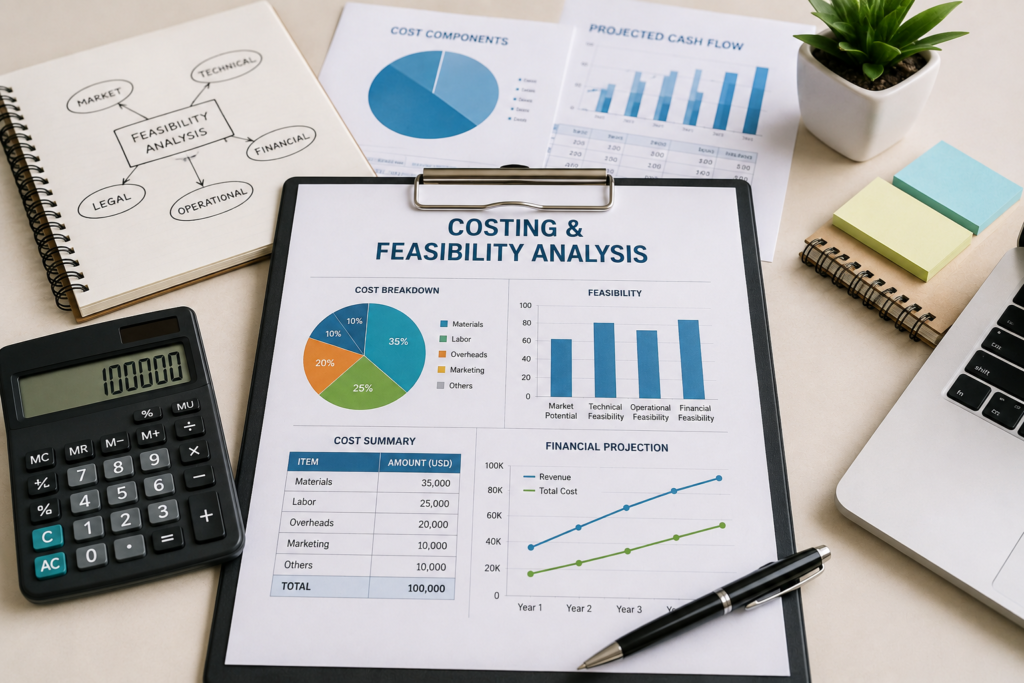
Costing & Feasibility Analysis determines whether a garment can be produced efficiently and within the buyer’s target price. The merchandising and production teams evaluate fabric and trim costs, labor, manufacturing processes, production capacity, lead time, and quality requirements. They also identify potential risks and recommend cost-effective solutions without compromising product quality. This analysis ensures the design is commercially viable, technically feasible, and ready for successful sampling and bulk production.
Sample Development
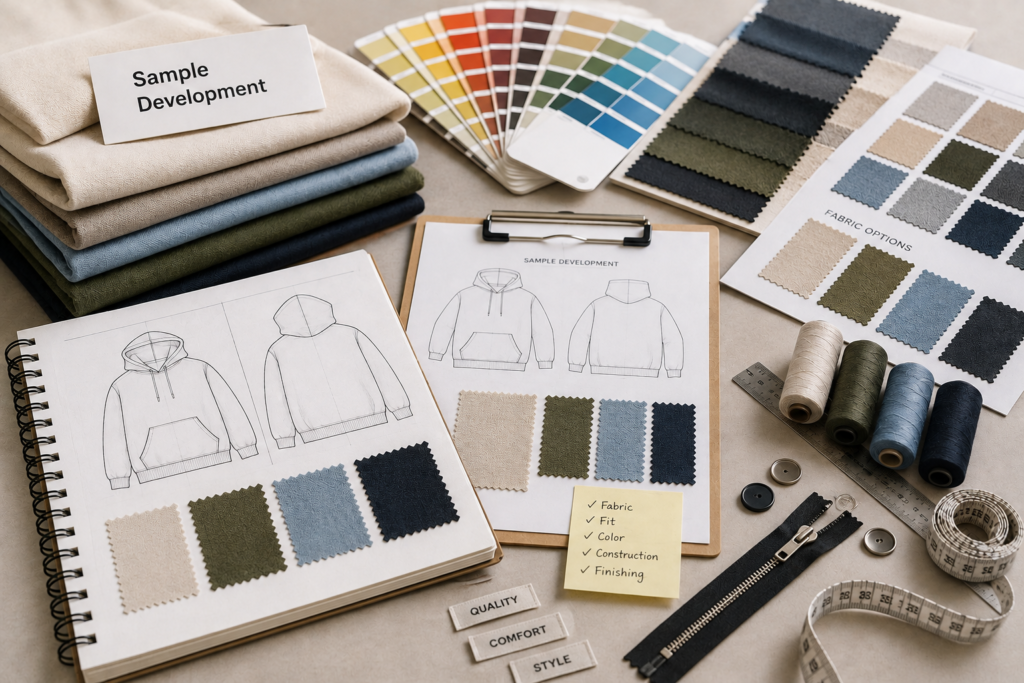
Sample Development is the process of creating the first physical prototype of a garment based on the approved design, pattern, and technical specifications. It allows the design and merchandising teams to evaluate the garment’s fit, construction, appearance, and overall quality before mass production. Any issues related to measurements, stitching, or materials are identified and corrected during this stage. A well-developed sample ensures the final product meets buyer expectations and production standards.

Buyer Approval
Buyer Approval is the stage where the completed sample is submitted to the customer for evaluation and final acceptance. The buyer reviews the garment’s design, fit, measurements, fabric, trims, color, construction, and overall quality to ensure it meets all agreed specifications. Any required modifications are communicated and implemented before production begins. Once the sample receives formal approval, the garment is authorized for bulk manufacturing, ensuring confidence in the final product.
Quality Inspection
Quality Inspection ensures that garments meet the required standards before shipment. The quality team conducts inspections throughout the production process, checking fabric quality, stitching, measurements, construction, finishing, labeling, and packaging. Any defects or inconsistencies are identified and corrected to maintain compliance with buyer specifications and industry standards. Thorough quality inspections help minimize defects, improve customer satisfaction, and ensure that only approved, high-quality garments are delivered to the buyer.

Packing & Shipment
Packing & Shipment is the final stage of the garment production process, where finished products are carefully packed according to buyer specifications and international shipping standards. Each garment is inspected, folded, labeled, and packed to ensure protection during transportation. Shipping documents are prepared, and logistics are coordinated to ensure timely delivery. Efficient packing and shipment help maintain product quality, prevent damage in transit, and ensure customer satisfaction through on-time delivery.